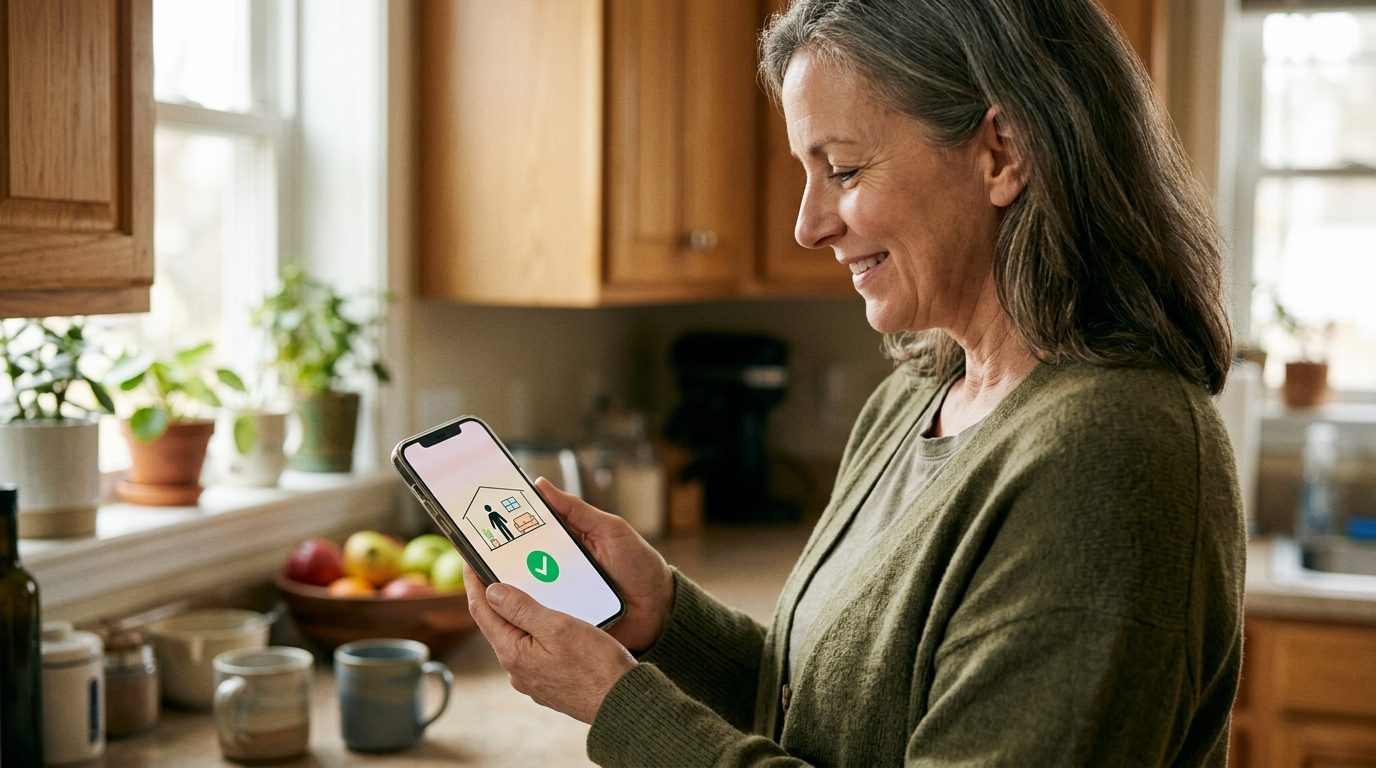
Kinwatch notices falls, missed mornings, and night wandering — then tells you. Never a video by default.
Concept product in development · early access, not yet for sale
Shared room, not the bedroom
Your parent says they're fine — until the day they aren't, and nobody finds out for hours.
A fall can go unheard. No one's close enough to hear it happen.
Cameras feel like spying. Your parent already said no to a live feed.
You can't be the only alarm. Daily calls miss the 3am wandering.
A small sensor-camera for shared rooms, paired with a family app.
Over the first couple weeks, it quietly learns your parent's normal rhythm.
An on-device chip turns motion into a moving outline. Raw video is never stored or sent anywhere, by default.
A fall-like event, long stillness, or late-night wandering sends a plain-language alert — not a clip to watch.
Spots fall-like movement from the outline, alerts right away.
Flags long stretches with no movement, or no morning activity.
Flags movement through the house at unusual late hours.
You'd only ever see a moving outline, never a face or room.
We didn't invent the underlying ideas — here's the public research behind them.
27.6% of adults 65+ reported a fall in the past year (CDC); a third of over-90 fallers lay on the floor an hour or more (BMJ, 2008).
CDC / MMWR ↗ · Fleming & Brayne, BMJ ↗A systematic review covers 81 vision-based fall detection systems — a studied field, not a marketing idea.
Gutiérrez et al., Sensors 2021 ↗Dementia-care researchers have tested anonymizing people into skeleton figures to protect privacy while still tracking risk.
BioMedical Engineering Online, 2023 ↗A nightly call tells her how mom says she's doing. Kinwatch tells her when something actually changed.
Wants to know if his dad is wandering at 3am again — without a monitor on his bed.
Three siblings, three time zones, one shared circle — nobody's guessing who already checked in.
Nothing is charged today. This is the plan we're testing — tell us on the waitlist if it looks right.
Early-access pricing (planned) — subject to change before any public launch.
By default, no. The camera processes everything on-device and shows a moving outline instead of video. Raw video isn't stored or sent to the cloud by default.
No — it's built around consent. Set it up together, place it in rooms they agree to, and they should always be able to say no.
Like any sensor system, it can miss an event or send a false alert. It helps you notice sooner — it isn't a medical device and doesn't replace emergency services.
No. It alerts your family circle. Deciding whether to call for help is always up to you.
Only alerts — what happened, when, where — go to your family's app. Raw video stays on-device by default. Full data details come before any public launch.
Detection runs locally on the device. Sending an alert still needs a connection; we're designing a short local buffer for brief outages.
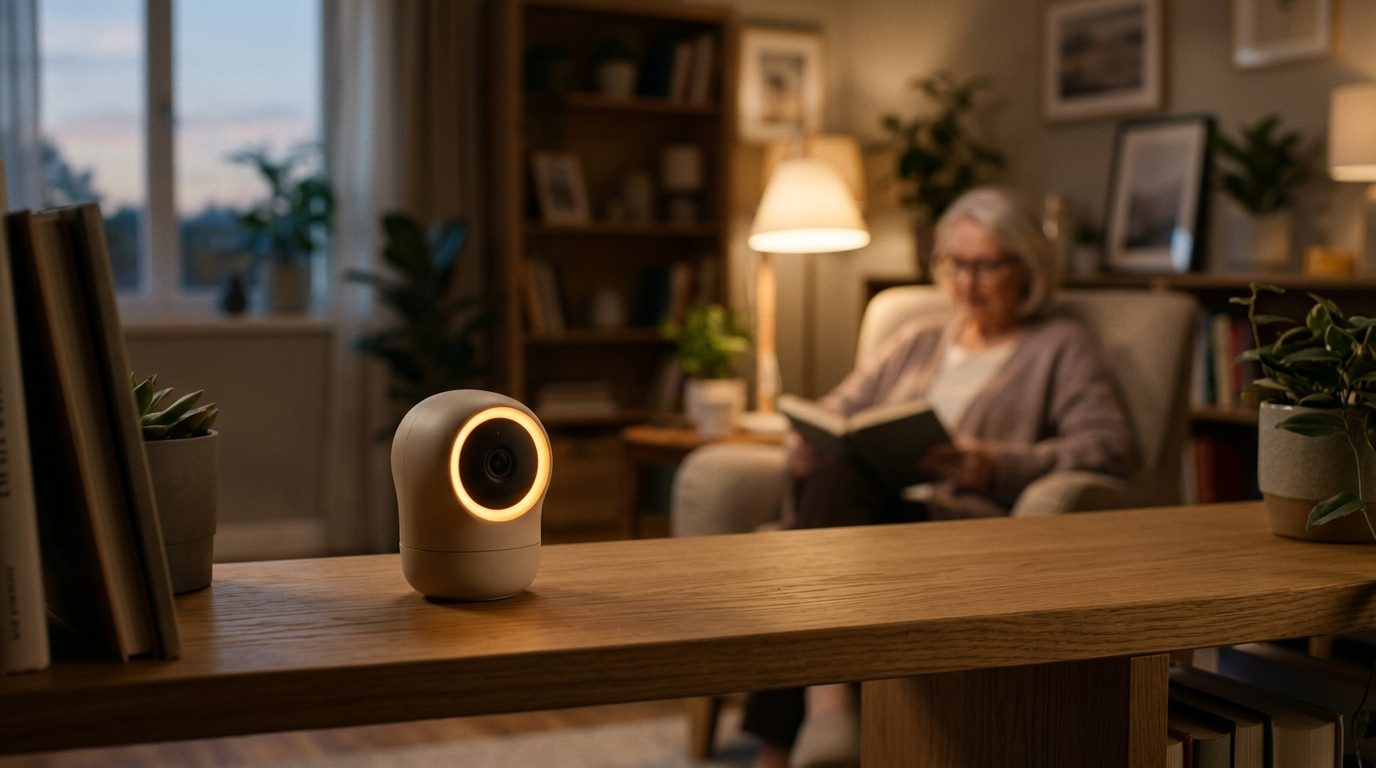
We're validating demand before building. Leave your email — no spam, no sales calls.
We'll email you as Kinwatch gets closer to early access.