One camera that watches your dog or cat while you're out, and turns the day into a timeline you can actually read.
Not a vet diagnosis. Pawtrail helps you notice, it never replaces one.
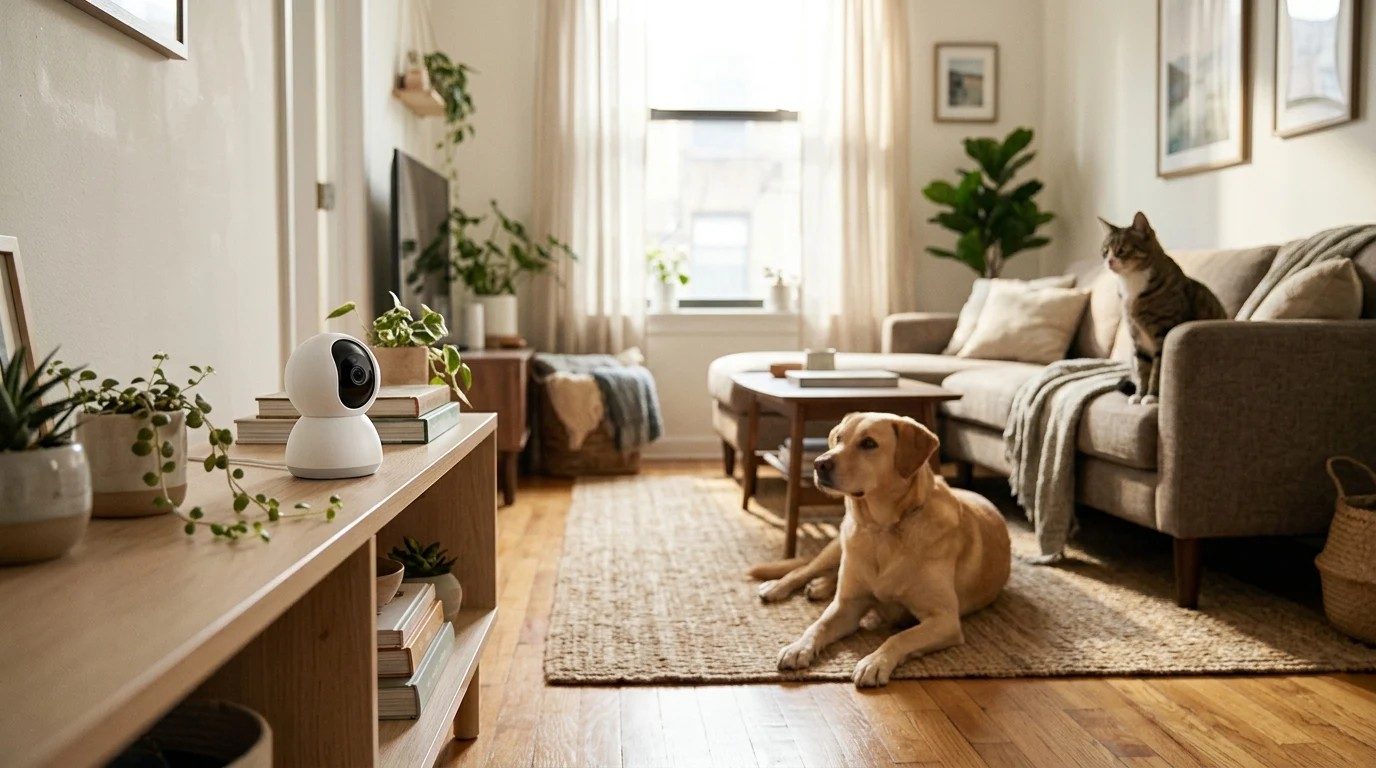
Thin walls, a neighbor who already knocked once, a pet who can't tell you what the afternoon was like.
A text about barking during your meetings, with no idea when it started.
An untouched bowl, or a cat under the bed, and no clue what led to it.
"When did the vomiting start?" is hard to answer from memory.
One camera, aimed at the living room, crate or window perch.
A quiet first stretch: typical rest, play and bark patterns, no alerts yet.
A daily "how was their day" timeline, plus a push alert the moment something looks off.
Minutes active, resting or pacing, charted across the day.
Flagged by length and intensity, against their own baseline.
Pacing and vocal patterns near the door, shown with the clip.
Missed meals, vomiting, or stillness past their normal nap.
One evening timeline, so you walk in already knowing.
Let them hear your voice between meetings, on your schedule.
We build on existing behavior studies, not our own invented metrics.
Harvey et al. (2022, Animals): dogs whose alone-time jumped most were most likely to develop new separation behaviour, including vocalizing.
Read the study →AAFP/ISFM guidelines: cats rarely show overt stress. Quiet shifts like hiding matter most — what our cat mode is tuned to.
Read the guidelines →No diagnosis, no illness detection. Just your pet's baseline and something concrete to bring to the vet.
Needs to know if her anxious rescue's whining is easing or getting worse — with proof for the trainer, not just a feeling.
His older cat has started hiding more. He wants the pattern, not another guessing game at 7pm.
One noise complaint already. They want to catch the barking windows before the next one.
Nothing is billed today — these are the tiers we're planning to launch with.
No. It flags patterns against your pet's baseline and shows the clip. Any health call stays with your vet or trainer.
Detection runs on-device. Clips are encrypted; only you and anyone you invite can view them.
Aimed at your pet's area, not shared spaces. You control access. Not built for monitoring people.
Roughly two weeks of quiet learning before alerts turn on. Before that, it says it's still calibrating.
Both, with separate tuning: bark and whine patterns for dogs, a stillness-and-hiding model for cats.
Just power and Wi-Fi. Basic live view works free; tracking, alerts and timeline are a paid tier at launch.
We'll email you as cameras become available, starting with working owners in apartments.
We'll reach out as early-access spots open up.