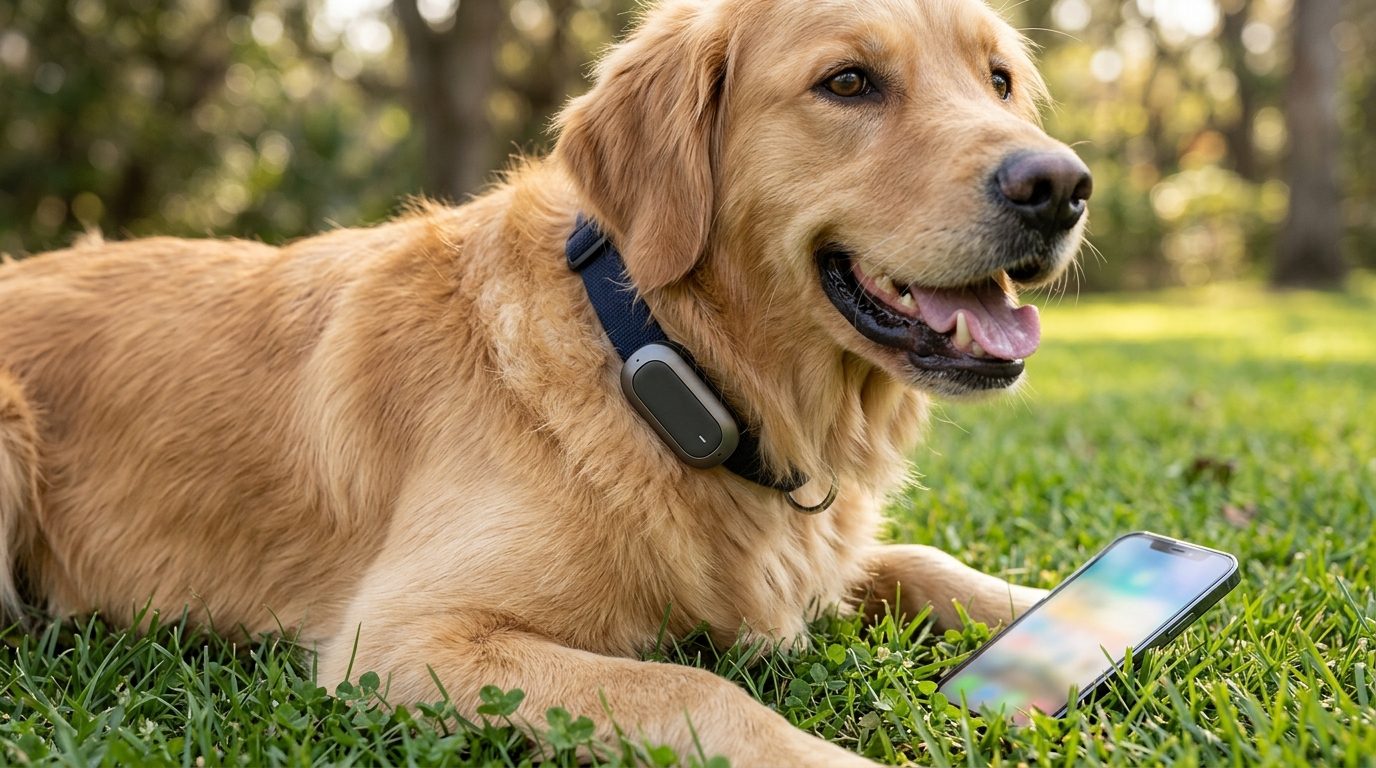
Tailspeak reads barks, growls and body language and names the likely feeling — alert, play, frustrated. It learns your dog, and reads mood and context, not words.
Early access. Clip + app in development — nothing to buy yet.
The problem
You love your dog. You're still guessing.
Dogs don't have words, so owners fill the gap with hunches — and the hunches are often wrong.
Every bark sounds the same
Door, stranger, boredom — one reaction, even when the cause is different.
Warning signs get missed
The stiff posture before a snap is easy to miss around kids and guests.
"Normal" differs per dog
Generic advice can't know what your dog's own whine actually means.
How it works
Three steps, running quietly in the background.
1
Clip it on
A small listener clips to any collar and catches barks, whines and growls.
2
It listens and watches
On-device models read sound and, through the camera, tail, ears and posture — instantly.
3
It learns your dog
Every confirmed read sharpens a profile unique to your dog over time.
Features
Built for the moments you need a read.
Bark & growl reader
Flags the likely trigger — stranger, play, frustration — from sound patterns.
Body-language camera
Weighs tail, ears and posture alongside sound for a fuller read.
Per-dog profile
Learns your dog's own baseline, so reads get sharper over time.
Door & stranger alerts
A push alert when the pattern looks like "someone's here."
Away-mode check-ins
Logs sustained distress while you're out into one simple summary.
Pattern history
A searchable timeline to spot patterns across weeks, not just moments.
Science
Grounded in published dog-communication research.
Tailspeak doesn't translate language — dogs don't have one. It's built on real, published work showing barks and body language carry classifiable context.
Barks carry context
Molnár et al. (2008) sorted 6,000+ barks by situation well above chance using acoustic patterns alone.
None of this maps barks to English sentences. Accuracy is above chance, not perfect — Tailspeak shows a likely read with a confidence level, not a verdict.
Who it's for
Three owners who'd use this most.
New owner
Dana, puppy, three weeks in
Wants a second opinion on 2am whines — bathroom, or just protest?
Multi-dog home
Marcus, two dogs that bicker
Can't always tell rough play from an actual warning growl.
Reactive dog
Priya, dog reacts to guests
Wants to catch the stiff-posture warning before the lunging starts.
No. Dogs have no word-language. Tailspeak reads context and likely mood — a best-effort read with a confidence level, not a translation.
Does the camera record my home?
Plan is on-device processing: the feed is analyzed in the moment and discarded, not stored or uploaded as video.
Can it predict a bite?
No. It can surface early signals tied to escalating discomfort — not a safety guarantee or trainer substitute.
Clip vs. app — what does each do?
The clip's mic catches sound close to the source. The app's camera reads body language when you point your phone at your dog.
How accurate is it?
Unknown yet: Tailspeak hasn't been tested. In published studies, software sorted barks by context well above chance but far from perfectly, so expect best guesses.
Is this a medical tool?
No. It doesn't diagnose anxiety, pain or any condition — for real concerns, it points you to a vet or trainer.
Be first to try it on your dog.
We'll email you when early access opens. No spam, no sharing your email.
You're on the list.
We'll reach out as early access opens. Thanks for helping us test this.